AI Explorers • Middle School • Grades 6–8

AI Explorers: AI Literacy for Middle School

Students examine how AI systems use data and patterns, strengthen prompting and verification, identify bias and privacy risks, and document responsible decisions.

  • Eight-week portfolio pathway
  • Analyze • Audit • Verify • Evaluate • Design
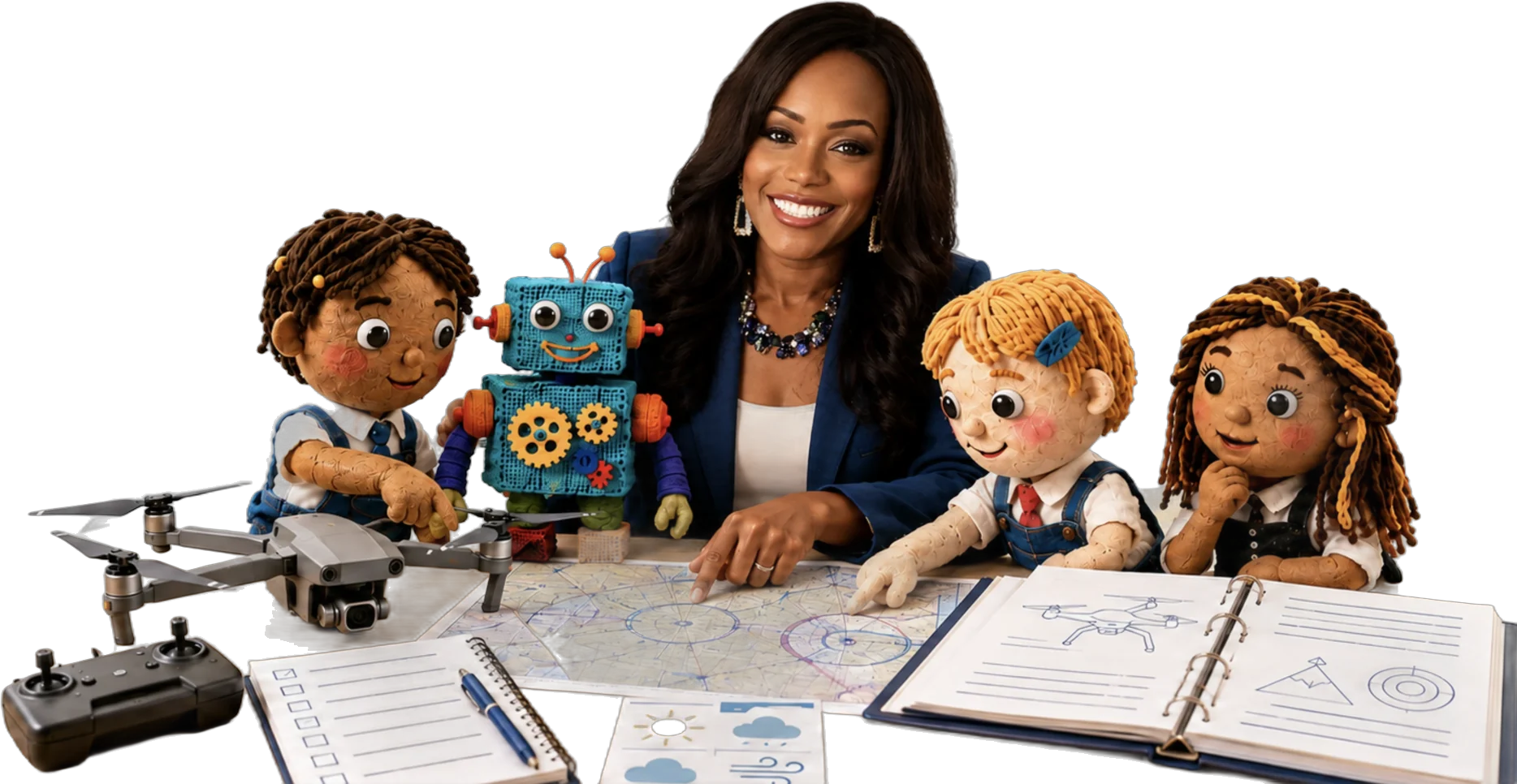
Andrea Davis-Baptiste, founder of Future Ready AI, smiling with the Future Ready AI student puppets and robot at a table with a drone, controller, map, and workbook.

Pathway overview

Watch the pathway overview

Middle School

AI Explorers

Middle School • Grades 6–8Eight-week portfolio pathwayAnalyze • Audit • Verify • Evaluate • Design

Sample evidence: system analysis brief, verification record, impact review, design recommendation, and portfolio reflection.

View middle-school scope →

Students examine how AI systems use data and patterns, strengthen prompting and verification, identify bias and privacy risks, and document responsible decisions.

About this learning pathway

Welcome to AI Explorers.

Middle-school learners practice stronger prompting, source-checking, privacy protection, and recognizing bias.

Through collaboration and hands-on projects, students learn to question AI and use it thoughtfully.
Scope & sequence

What students learn, unit by unit

Grades 6–8 • Eight-week responsible AI portfolio

Week 1 — AI Systems Analysis: Inputs, Outputs & Human Oversight

Analyze how an AI-supported system transforms information and identify where people must remain responsible.

Week 2 — Data Quality & Representation Audit

Examine how training examples and missing representation can shape system performance.

Week 3 — Privacy, Consent & Data Minimization

Decide what information is actually necessary and design safer data practices.

Week 4 — Verification Lab: Claims, Sources & AI Reliability

Check AI-generated claims against evidence, sources, context, and uncertainty.

Week 5 — Algorithmic Fairness & Access

Analyze how seemingly neutral inputs can create unequal outcomes and propose safeguards.

Week 6 — Synthetic Media, Influence & Digital Citizenship

Evaluate potentially altered media before believing or sharing it and document verification decisions.

Week 7 — Human-Centered Problem Framing & AI Fit

Investigate an authentic need before deciding whether AI belongs in the solution.

Week 8 — Responsible AI Design Challenge

Refine a solution concept with minimum necessary data, human review, safeguards, limits, and accountability.

Student-facing materials

Preview the workbooks

Public previews of the student workbooks for this pathway.

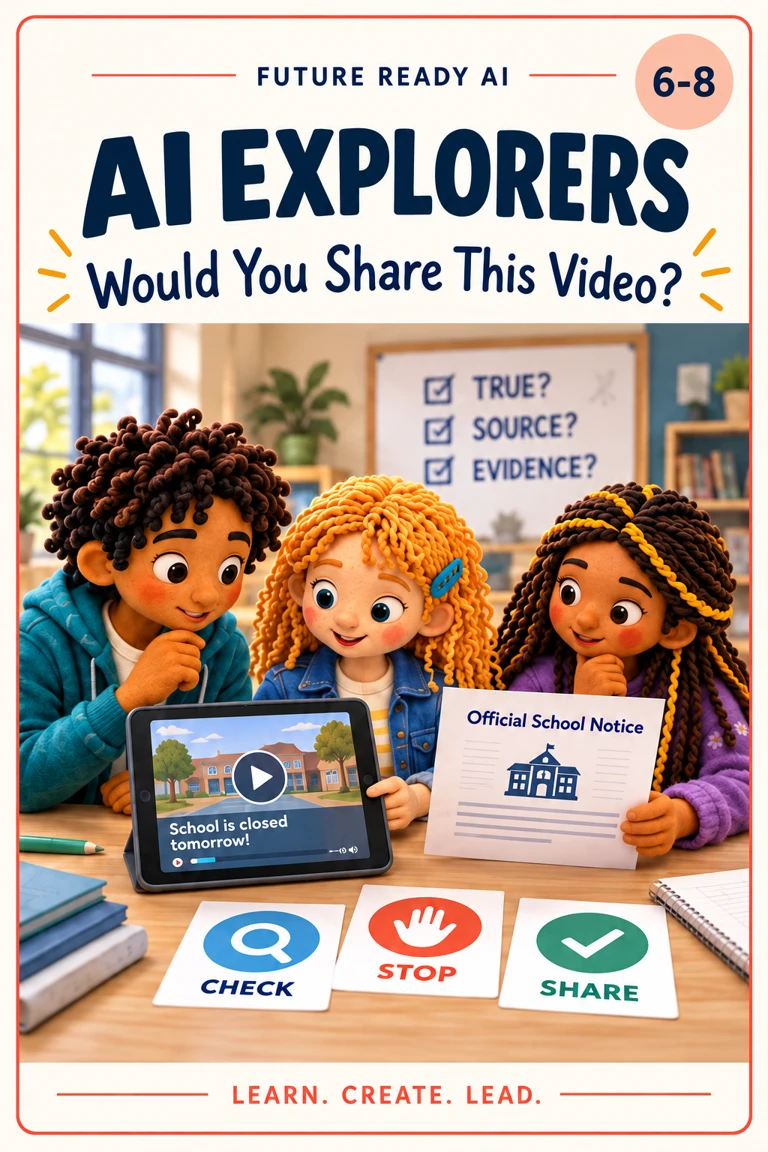
Lesson cover for “Would You Share This Video?,” AI Explorers, Grades 6–8: three students compare a school-closure video with an official school notice before deciding whether to share.

AI Explorers · Grades 6–8

Would You Share This Video?

Students compare a video claim with dated sources, identify missing evidence, and explain a responsible share, check, or stop decision.

Public lesson sample · PDF

View Lesson Sample (PDF, opens in a new tab)

Sample lessons

See a lesson from this pathway

Spotting the Difference: AI or Human-Made?

Grade Band: Middle School Estimated Time: 45 minutes
Learning Objectives
Students distinguish common characteristics of AI-generated text and images from human-made work, and explain their reasoning.
Key Vocabulary
Artificial intelligence, generated content, bias, verification
Activity Overview
In small groups, students review paired examples of AI-generated and human-made content, discuss identifying clues, and present their reasoning to the class.
Responsible AI Connection
Reinforces the habit of evaluating AI-generated information rather than accepting it at face value.
Assessment Method
Group discussion rubric plus a short individual reflection.
Required Materials
Printed or projected content pairs (provided), discussion guide (provided).

Career-Connected

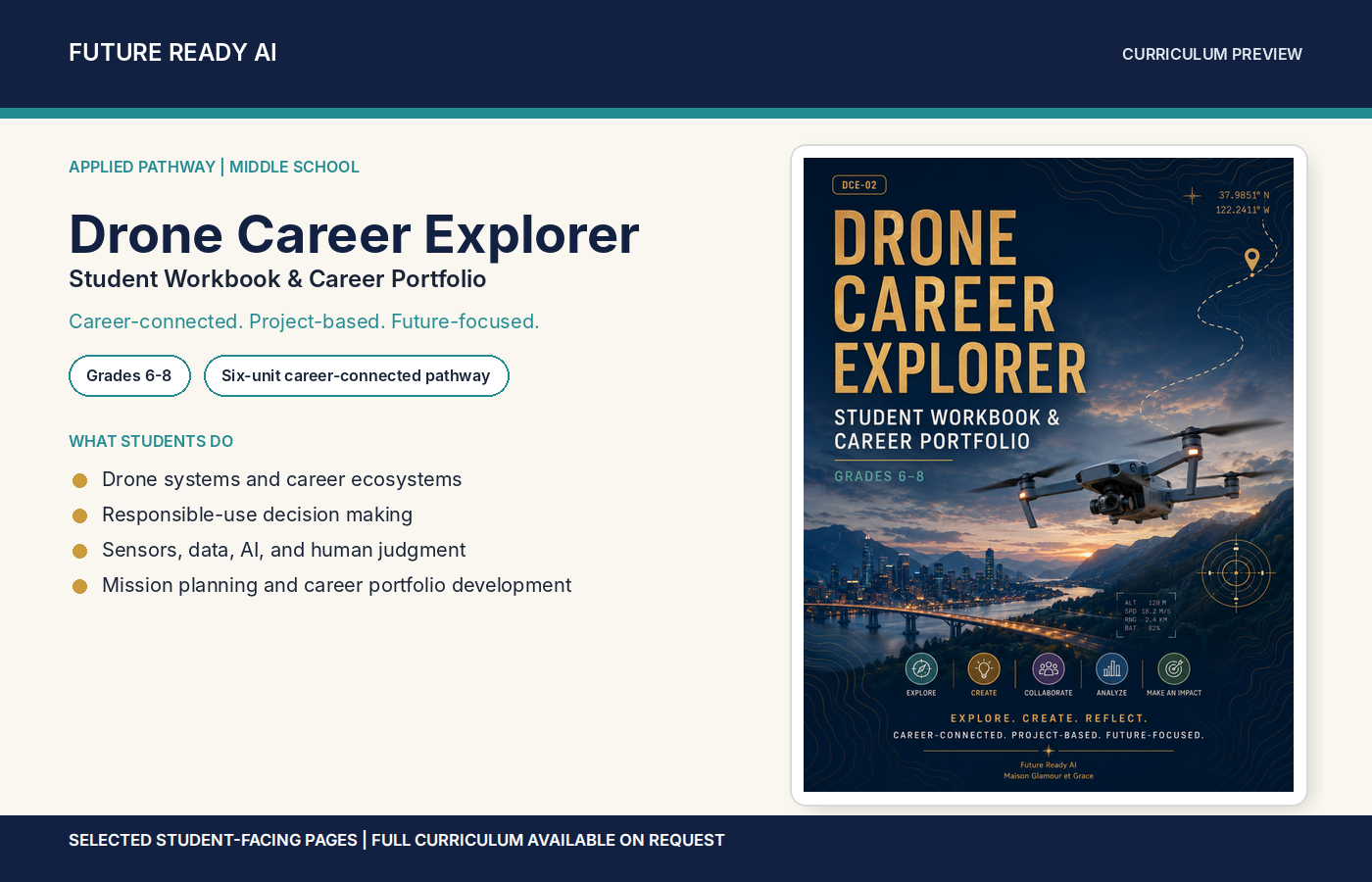
Plan a Responsible Drone Mission

Students define a mission goal, review safety and privacy considerations, plan a flight path, and explain how data may support an industry need.

Standards-informed: designed to support skills reflected in the ISTE Standards for Students, CSTA K–12 CS Standards, AI4K12 Five Big Ideas, and digital citizenship & media literacy, with responsible-AI guidance from UNESCO and the voluntary NIST AI RMF. Not a certified or formally completed alignment.

See standards-informed design →